
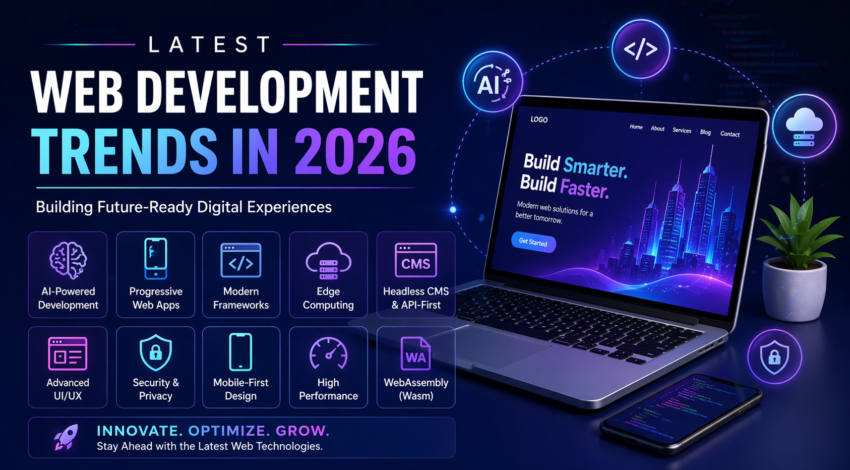
The world of web development is evolving faster than ever. What worked a few years ago is quickly becoming outdated as new technologies reshape how websites are built, optimized, and experienced. In 2026, businesses no longer need just a website they need fast, intelligent, scalable, and user-focused digital platforms.
From AI-powered development to lightning-fast performance frameworks, modern web development is all about delivering seamless user experiences while staying ahead of competition. In this blog, we explore the latest web development trends in 2026 that are transforming the digital landscape.
1. AI-Powered Web Development is the New Standard
Artificial Intelligence is no longer optional it’s now a core part of web development. AI tools are helping developers build smarter websites, automate coding tasks, and create highly personalized user experiences.
Modern websites can now:
- Adapt content based on user behavior
- Automatically optimize layouts and design
- Generate content and UI elements in real time
AI is also improving development speed, allowing businesses to launch websites faster and more efficiently. Developers are shifting from manual coding to AI-assisted workflows, making the entire process smarter and more productive.
2. Progressive Web Apps (PWAs) Are Dominating
Progressive Web Apps (PWAs) are becoming the preferred choice for businesses looking to deliver app-like experiences without the cost of native development.
PWAs offer:
- Fast loading speeds
- Offline functionality
- Mobile-first performance
- Seamless user experience
These apps combine the best of websites and mobile apps, making them highly effective for engagement and conversions. Businesses are increasingly adopting PWAs to reduce bounce rates and improve retention.
3. Server-Side Rendering (SSR) & Static Site Generation (SSG)
Performance is a major ranking factor today, and technologies like SSR and SSG are leading the way.
- SSR (Server-Side Rendering): Loads content faster and improves SEO
- SSG (Static Site Generation): Pre-builds pages for ultra-fast performance
These techniques ensure:
- Faster loading times
- Better search engine visibility
- Improved user experience
Search engines now prioritize speed, making these technologies essential for modern websites.
4. Rise of Modern Frameworks & Meta-Frameworks
Frameworks like Next.js, Nuxt, and other meta-frameworks are becoming the default choice for developers.
Why they matter:
- Faster development process
- Built-in performance optimization
- Better scalability
- SEO-friendly architecture
These frameworks focus on server-first rendering, making websites faster and more efficient than traditional approaches.
5. Edge Computing for Faster Performance
Speed is everything in today’s digital world. Edge computing is helping websites load faster by processing data closer to the user.
Benefits include:
- Reduced latency
- Faster content delivery
- Improved user experience
This trend is especially important for global businesses that need to deliver consistent performance across different regions.
6. Headless CMS & API-First Development
Traditional content management systems are being replaced by headless CMS solutions.
Key advantages:
- Greater flexibility
- Multi-platform content delivery
- Faster performance
- Better scalability
With API-first architecture, businesses can manage content across websites, apps, and digital platforms from a single system.
7. Advanced UI/UX & Motion Design
User experience is now at the center of web development. Modern websites focus on:
- Interactive designs
- Smooth animations (Motion UI)
- Minimalistic layouts
- Dark mode interfaces
These elements not only improve aesthetics but also enhance user engagement and retention.
8. Strong Focus on Security & Privacy
As cyber threats continue to grow, web security has become a top priority.
Modern websites now implement:
- HTTPS encryption
- Secure authentication systems
- Regular security audits
- AI-based threat detection
Security is no longer just a feature it’s a necessity for building trust with users.
9. Mobile-First & Responsive Design
With the majority of users accessing websites via mobile devices, mobile-first design is critical.
Modern websites are:
- Fully responsive
- Optimized for all screen sizes
- Designed for touch interactions
This ensures a consistent experience across devices and improves search rankings.
10. WebAssembly (Wasm) for High Performance
WebAssembly is enabling high-performance web applications by allowing developers to run code written in languages like C++ and Rust directly in the browser.
This leads to:
- Faster execution
- Better performance
- More complex web applications
It’s especially useful for applications like design tools, games, and heavy web apps.
Why These Trends Matter for Businesses
These web development trends are not just technical upgrades they directly impact business growth.
By adopting modern technologies, businesses can:
- Improve website speed and performance
- Enhance user experience
- Increase conversions and engagement
- Stay ahead of competitors
Websites are now growth engines, not just online presence tools.
The Future of Web Development
The future of web development is AI-driven, performance-focused, and user-centric. Websites will continue to evolve into intelligent platforms that understand user behavior and deliver personalized experiences in real time.
Businesses that embrace these trends early will gain a significant competitive advantage in the digital space.
Final Thoughts
Web development in 2026 is all about building fast, smart, and scalable digital experiences. From AI-powered automation to advanced frameworks and performance optimization, the industry is moving towards a more intelligent and efficient future.
If you want your business to succeed online, adopting these latest web development trends is no longer optional it’s essential.


